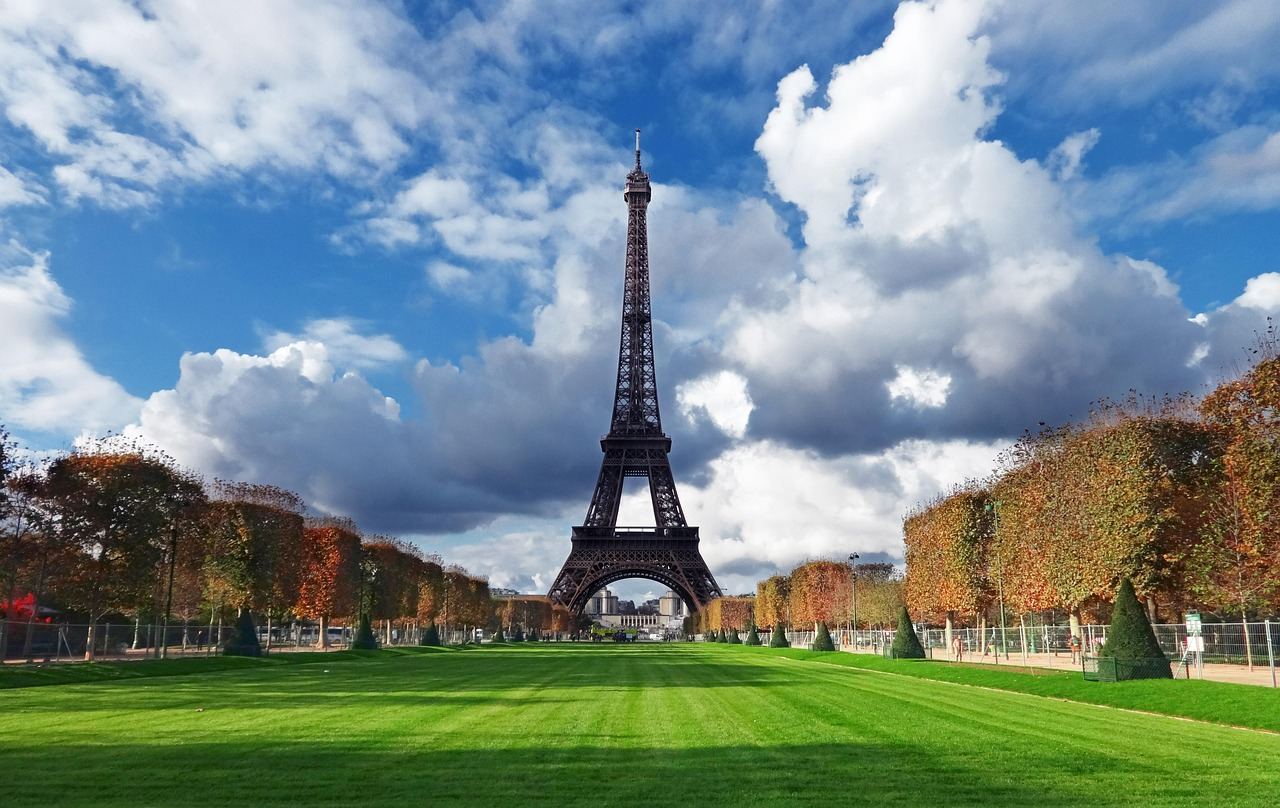
Paris 3 Day Itinerary (and 2-Day Version)
This Paris 3 day itinerary is built for first-timers who want the big sights at an active pace. Day 1 covers Île de la Cité, the Latin Quarter and the Musée d'Orsay; Day 2 follows the grand axis from the Louvre through the Tuileries and up the Champs-Élysées to the Eiffel Tower at night; Day 3 climbs to Montmartre before dropping into Le Marais. It was built with the Ask TripPilot planner from real stop times and walking minutes, then edited and checked against official sites. Use it as is, or customize it for your dates in seconds.
Quick answer: the 3-day plan at a glance
Day 1 is Sainte-Chapelle, Notre-Dame, the Latin Quarter and the Musée d'Orsay; Day 2 is the Louvre, the Tuileries, the Champs-Élysées, the Arc de Triomphe and the Eiffel Tower after dark; Day 3 is Sacré-Cœur, Place du Tertre, Le Marais and a Seine cruise. Don't start on a Monday: the Musée d'Orsay closes Mondays and the Louvre closes Tuesdays.
At a glance
| Day | Area/base | Highlights | Getting around |
|---|---|---|---|
| 1 | Île de la Cité, Latin Quarter and Saint-Germain | Sainte-Chapelle, Notre-Dame, Le Procope, Panthéon, Musée d'Orsay, Pont des Arts | Walk (7-15 min), plus one 18-min Metro or taxi ride |
| 2 | Louvre, Champs-Élysées and Eiffel Tower | Louvre, Angelina, Jardin des Tuileries, Champs-Élysées, Arc de Triomphe, Eiffel Tower at night | Walk all day (3-30 min between stops) |
| 3 | Montmartre and Le Marais | Sacré-Cœur, Place du Tertre, Place des Vosges, Rue des Francs-Bourgeois, Seine cruise | Walk, plus one 23-min Metro or taxi ride |
Is 3 days enough for Paris?
Yes, 3 days in Paris is enough for a first look at the headline sights if you group them by area, as this plan does. Each day sticks to one corridor, so most moves are walks, with only two rides in the whole trip.
What three days won't give you is slow time. The Louvre and the Orsay get a few hours each, and you'll pass cafés and side streets you'd love to explore. If lingering matters more than the big names, our slow Paris 4-day itinerary takes the opposite approach.
Who this itinerary is for
This plan is for first-time visitors who want the famous Paris sights in a short trip and don't mind long walking days. Day 2 alone is a walk of several miles, and every day starts by 9:30. Cost estimates are for 2 travelers, so it suits couples and friends, plus families with older kids. For a gentler pace, drop one stop per day: the Panthéon on Day 1, the Arc de Triomphe on Day 2 or the shopping stroll on Day 3.
If you have fewer or more days
With only 2 days, use the short version below. With 4 or 5 days, give the Louvre and the Orsay longer visits, spend a full afternoon in Le Marais, and borrow a day from the slow Paris itinerary. The Paris travel guide and the France travel guide have ideas for extra days. To swap stops or match your dates, build your own version with Ask TripPilot.
Day 1: Islands, Latin Quarter & Orsay
Île de la Cité - Latin Quarter - Saint-Germain
- Sainte-Chapelle → 7 min walk
- Notre-Dame de Paris → 13 min walk
- Le Procope → 15 min walk
- Panthéon → 18 min transit
- Musée d'Orsay → 13 min walk
- Pont des Arts → 10 min walk
- Brasserie Lipp
Morning
Start at 9:00 at Sainte-Chapelle, the royal chapel on Île de la Cité with its walls of stained glass. Visits run on timed slots, so book one ahead on the official Sainte-Chapelle site; the chapel opens at 9 am. Give it an hour, then walk to Notre-Dame Cathedral for 10:15. Entry to the restored cathedral is free, and a free time-slot reservation is recommended to skip the busiest lines, as the cathedral's official FAQ explains.
Afternoon
Cross into the Latin Quarter for lunch at noon at Le Procope, said to be the oldest café in Paris, and give it 75 minutes. At 1:30, walk up to the Panthéon to see Foucault's pendulum and the crypt where Voltaire, Victor Hugo and Marie Curie are buried. Then ride over to the Musée d'Orsay for 3:00. Book a timed ticket in advance and go straight to the top-floor Impressionist galleries, then work your way down past the giant station clock.
Evening
At 5:45, walk to the Pont des Arts, the footbridge that lines up the tip of Île de la Cité with the Louvre facade, for half an hour of photos in the softer light. Dinner at 6:45 is at Brasserie Lipp, an old-school Saint-Germain brasserie known for choucroute, mirrored walls and waiters in long aprons.
Getting between stops
Walk 7 minutes from Sainte-Chapelle to Notre-Dame, 13 minutes to Le Procope and 15 minutes up to the Panthéon. From the Panthéon, take the Metro or a taxi, about 18 minutes, to the Musée d'Orsay. After the museum it's a 13-minute walk along the Seine to the Pont des Arts and 10 minutes to dinner.
Where to eat
Le Procope for lunch and Brasserie Lipp for dinner, both in Saint-Germain. Book dinner ahead if you can, and check each restaurant's opening days before you go.
Day 2: Louvre to the Eiffel Tower
Louvre - Champs-Élysées - Eiffel Tower
- Louvre Museum → 13 min walk
- Angelina → 3 min walk
- Jardin des Tuileries → 26 min walk
- Avenue des Champs-Élysées → 17 min walk
- Arc de Triomphe → 30 min walk
- Café Constant → 11 min walk
- Eiffel Tower
Morning
Be at the Louvre Museum at 9:00, when it opens, with a timed ticket booked on the Louvre's official hours and admission page. The museum recommends time-slot bookings for everyone, and last entry is an hour before closing. Pick three or four works before you go in, such as the Mona Lisa, the Winged Victory and the Venus de Milo.
Afternoon
Walk to Angelina on Rue de Rivoli for lunch at 12:15 and order the thick hot chocolate. At 1:30, rest your feet on the green metal chairs around the big pond in the Jardin des Tuileries, which is free. Then walk the Avenue des Champs-Élysées from Place de la Concorde at 3:00, ducking into side streets when the sidewalks get busy. At 4:20, take the underground passage to the Arc de Triomphe and climb to the rooftop for the view down the twelve avenues.
Evening
Dinner at 6:30 is at Café Constant, a bistro run by chef Christian Constant a short walk from the tower. At 8:15, head up the Eiffel Tower with a timed ticket bought in advance. After dark, the tower's lights sparkle for the first five minutes of every hour, according to the official Eiffel Tower site, so plan your time at the top or on the ground around the hour.
Getting between stops
This is a walking day: 13 minutes from the Louvre to Angelina, 3 minutes into the Tuileries, 26 minutes up to the Champs-Élysées and 17 minutes along the avenue to the Arc de Triomphe. The longest leg is the 30-minute walk to dinner, and the Eiffel Tower is 11 minutes from there.
Where to eat
Angelina for lunch and Café Constant for dinner. Café Constant fills up fast, so arrive early or reserve, and check opening days before you go.
Different dates or pace? Customize this plan with Ask TripPilot →
Day 3: Montmartre Heights & Marais Streets
Montmartre - Le Marais
- Sacré-Cœur Basilica → 3 min walk
- Place du Tertre → 23 min transit
- Breizh Café → 10 min walk
- Place des Vosges → 7 min walk
- Rue des Francs-Bourgeois → 23 min walk
- Vedettes du Pont Neuf → 12 min walk
- Au Pied de Cochon
Morning
Start at 9:30 at Sacré-Cœur Basilica in Montmartre, which is free to enter and open every day of the year. The view from the front steps is the reason to come early, before tour groups fill them. The dome climb is a separate paid ticket bought on-site. At 10:40, walk around the corner to Place du Tertre to watch the painters at work and wander the lanes around the square.
Afternoon
Take the Metro or a taxi down to Le Marais for lunch at 12:15 at Breizh Café, known for buckwheat galettes and Breton cider. At 1:30, walk to Place des Vosges and spend an hour under its red-brick arcades. Then give yourself two hours on Rue des Francs-Bourgeois from 2:45, browsing French fashion and design shops between the old mansions.
Evening
At 5:15, board a Vedettes du Pont Neuf boat at the tip of Île de la Cité for an hour-long Seine cruise past the Louvre, the Orsay and the Eiffel Tower. Finish at 6:45 with dinner at Au Pied de Cochon by Les Halles, known for its onion soup.
Getting between stops
Walk 3 minutes from Sacré-Cœur to Place du Tertre, then ride the Metro or a taxi, about 23 minutes, to Le Marais. From lunch it's 10 minutes to Place des Vosges and 7 minutes to Rue des Francs-Bourgeois. The walk to the boat is 23 minutes, and dinner is 12 minutes from the pier.
Where to eat
Breizh Café for lunch (book ahead or expect a wait) and Au Pied de Cochon for dinner. Check both restaurants' opening days before you go.
Where to stay
Saint-Germain-des-Prés (6th arrondissement)
Best for first-timers who want classic Left Bank streets and cafés.
Le Marais (3rd and 4th arrondissements)
Best for couples and food lovers who want to walk out the door into restaurants and shops.
Louvre and Opéra (1st and 2nd arrondissements)
Best for an easy start on Day 2 and good Metro connections everywhere else.
Near the Eiffel Tower (7th arrondissement)
Best for families and travelers who want calm residential streets and an easy walk back after the night visit on Day 2.
Getting around
Paris is best on foot, and this plan leans on walking: Day 2 is entirely on foot, and there are only two rides, 18 minutes on Day 1 and 23 minutes on Day 3.
For the Metro, RATP sells a flat-fare Metro-Train-RER ticket that covers the Metro, RER and the Montmartre funicular, loaded onto a Navigo Easy pass or your phone, as explained on the RATP ticket page. Paper tickets are no longer sold in Metro and RER stations, so pick up a Navigo Easy pass or set up the app when you arrive.
Best time to go
The best time for a 3-day Paris trip is April to June or September to October. Days are mild, often in the 60s to low 70s °F (about 16-23°C), which is ideal for long walking days like Day 2. July and August are the warmest months, with highs in the mid-70s °F (about 24°C) and occasional heat waves, and the busiest at the big museums and the Eiffel Tower.
Winter is cold and gray, with highs in the mid-40s °F (about 7°C), but crowds are thinner. In any season, book timed tickets for Sainte-Chapelle, the Louvre, the Orsay and the Eiffel Tower ahead.
Budget: what this trip costs
The Ask TripPilot planner estimates about $838 for 2 travelers for the three days, or about $419 per person, not counting flights or hotels (estimate dated October 14, 2026). That's $298 for Day 1, $350 for Day 2 and $190 for Day 3, covering tickets, meals and the cruise at the stops in this plan.
Day 2 costs the most, with three paid sights: the Louvre ($35 per person), the Arc de Triomphe ($20) and the Eiffel Tower ($40). Notre-Dame, Sacré-Cœur, the Tuileries and Place des Vosges are free, so swapping a dinner for a picnic is the easiest saving.
2 days in Paris: the short version
With two days, keep the stops most first-timers would miss most. Day 1: Sainte-Chapelle at 9:00, Notre-Dame at 10:15, lunch at Le Procope, then the Musée d'Orsay in the afternoon and dinner in Saint-Germain. Day 2: the Louvre at 9:00, lunch at Angelina, the Tuileries, a walk up the Champs-Élysées, then dinner near the tower and the Eiffel Tower after dark.
What you lose is Day 3: Montmartre, Le Marais and the Seine cruise. If Montmartre matters more to you than the Arc de Triomphe rooftop, skip the arch and take the Metro up to Sacré-Cœur in the late afternoon, then come back down for dinner and the Eiffel Tower. The same closures apply: avoid a Monday for the Orsay day and a Tuesday for the Louvre day.
Customize this itinerary with Ask TripPilot
FAQ
What should you see in Paris in 3 days?
In 3 days, see Sainte-Chapelle, Notre-Dame, the Latin Quarter and the Musée d'Orsay on Day 1; the Louvre, the Tuileries, the Champs-Élysées, the Arc de Triomphe and the Eiffel Tower at night on Day 2; and Sacré-Cœur, Place du Tertre, Le Marais and a Seine cruise on Day 3. Grouping sights by area keeps most moves to short walks, with only two Metro or taxi rides.
Is 2 days enough for Paris?
Yes, 2 days is enough for the Paris highlights if you focus. Spend one day on the islands, Notre-Dame and the Musée d'Orsay, and the other on the Louvre, the Tuileries, the Champs-Élysées and the Eiffel Tower at night. You'll miss Montmartre and Le Marais, which is why a third day is worth adding if you can. Avoid a Monday for the Orsay day.
Is the Paris Museum Pass worth it for 3 days?
It can be, if you visit several covered sites in a short time. The Paris Museum Pass comes in 2, 4 and 6-day versions, counted in consecutive hours from your first visit, and covers the Louvre, the Orsay, the Arc de Triomphe, Sainte-Chapelle and the Panthéon from this plan. It doesn't cover the Eiffel Tower or temporary exhibitions, and you may still need a time-slot booking at some museums.
Can you do Paris in 3 days with kids?
Yes, but cut it back. Kids usually do best with fewer museums, so trim the Louvre to two hours, skip the Panthéon, and take the Metro for Day 2's longest walks. Sacré-Cœur, Notre-Dame, the Tuileries and the Seine cruise work well for families. Under-18s get free entry at Sainte-Chapelle. Build in a midday break at your hotel and keep the Eiffel Tower visit earlier in the evening.
How much does a 3-day trip to Paris cost?
The Ask TripPilot planner estimates about $838 for 2 travelers for this 3-day trip, or about $419 per person, not counting flights or hotels. That covers tickets, meals and the Seine cruise: $298 for Day 1, $350 for Day 2 and $190 for Day 3. You can spend less by picnicking instead of a sit-down meal or by skipping paid stops.
More guides and trips
- Paris travel guide
- Paris Itinerary: 4 Slow Days in the City of Light
- France travel guide
- Eiffel Tower (Paris)
- Louvre Museum (Paris)
- Notre Dame Cathedral (Paris)
- Musee D Orsay (Paris)
- Montmartre and Sacre C Ur (Paris)
- Le Marais (Paris)
- London Itinerary: 3 Days of Royal & Historic Sights
- Rome 3 Day Itinerary: Classic First-Timer Plan