Souks of the Medina
Marrakech, Morocco · Shopping
About Souks of the Medina
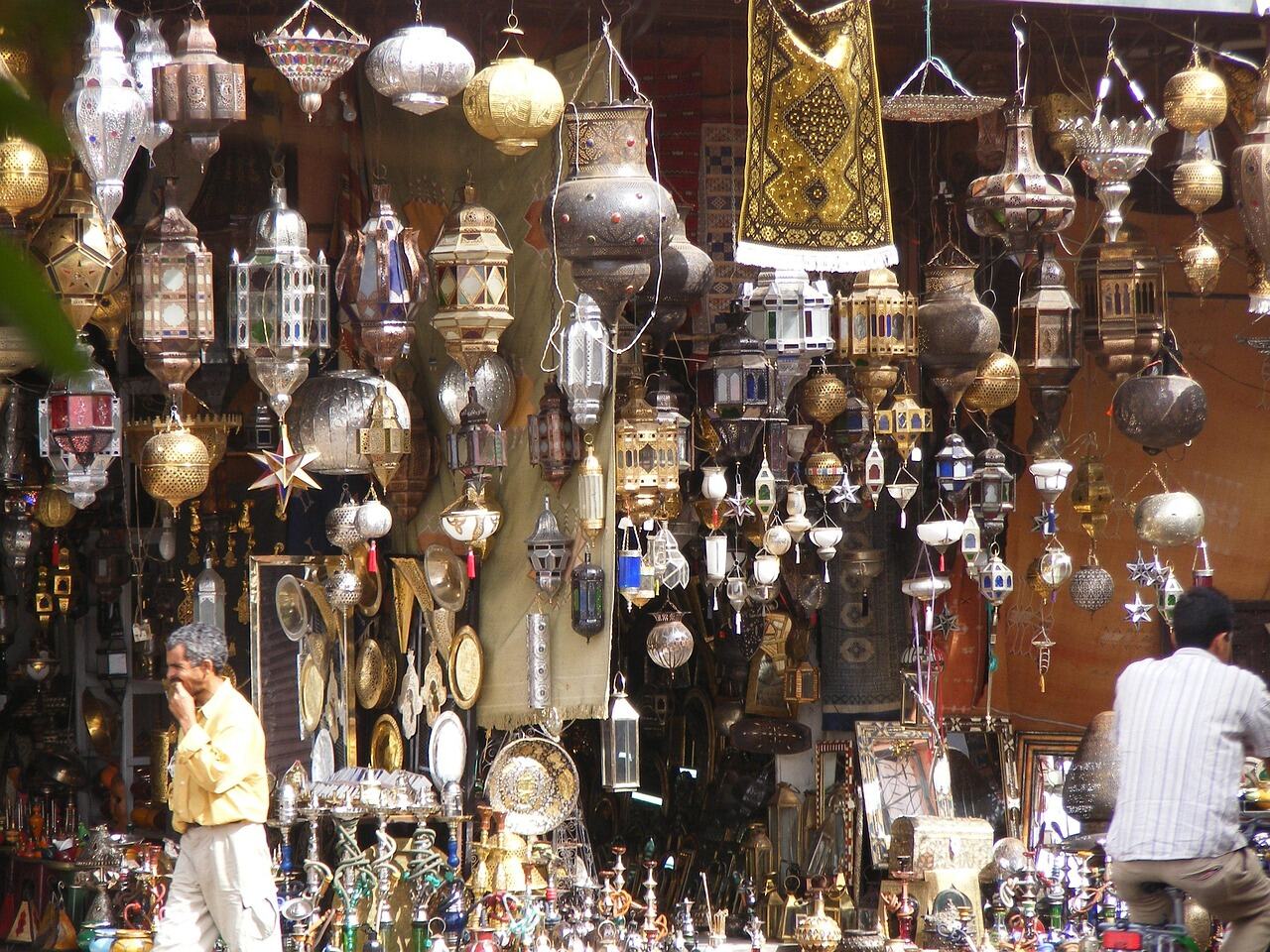
The Souks of the Medina in Marrakech form one of the largest and most vibrant traditional marketplaces in North Africa. This labyrinth of alleys is famous worldwide for its dazzling array of artisanal crafts, from hand-woven Berber rugs and hammered brass lanterns to aromatic spice pyramids. Exploring these bustling covered passageways offers an unforgettable sensory dive into Morocco's rich cultural heritage.
Don't miss
- Marvel at the vibrant mounds of fragrant spices, dried herbs, and traditional remedies in the lively Rahba Kedima square.
- Watch skilled artisans hammer intricate patterns into glowing metal lanterns and teapots in Souk Haddadine.
- Admire the kaleidoscope of freshly dyed skeins of wool and silk hanging to dry overhead in Souk Sebbaghine.
- Browse an incredible selection of handcrafted leather babouches and woven carpets along the bustling corridor of Souk Semmarine.
Plan your visit
Visit in the morning around 10:00 AM before the alleys get overly crowded, or late in the afternoon when the heat subsides. Keep in mind that many stalls close on Friday middays for weekly prayers.
Exploring the souks is completely free, and no tickets or advance bookings are required. You only need to pay for any artisanal goods, food, or drinks you decide to purchase.
The souks spread out immediately north of Jemaa el-Fnaa square in central Marrakech. Because motor vehicles cannot enter the narrow alleys, the easiest way to arrive is on foot from the main square or by taking a taxi to the edge of the Medina.
Tips for visiting
- Friendly haggling is an expected part of the culture, so negotiate politely and never accept the first quoted price.
- Carry small denominations of cash in Moroccan Dirhams, as the majority of market vendors do not accept credit cards.
- Download an offline map application before you enter, as GPS connections often drop inside the covered passageways.
- Stay alert and step aside for speeding motorbikes, handcarts, and pack donkeys navigating the narrow pedestrian paths.
- Always ask for permission before taking close-up photographs of craftsmen or individual market stalls.
Souks of the Medina FAQ
Is it safe to explore the souks independently?
Yes, walking through the souks is generally safe for independent travelers, though you should keep an eye on your personal belongings in dense crowds. Politely decline unsolicited offers from strangers offering directions or tours. If you truly feel disoriented, simply ask a seated shopkeeper inside a permanent stall to point you toward Jemaa el-Fnaa.
What should I wear when visiting the market?
Dress modestly by choosing clothing that covers your shoulders and knees to respect local traditions. Lightweight, breathable fabrics and supportive closed-toe shoes are essential for walking across uneven cobblestones. A light scarf is also handy for sun protection when stepping into open courtyards.
How does bargaining work in the souks?
Treat bargaining as a friendly conversation rather than a confrontation, keeping your tone polite and patient. A classic guideline is to counter with roughly half the vendor's opening quote and negotiate until you settle on a mutually acceptable price. If a merchant won't meet your budget, smile, say thank you, and move along without stress.
What are the typical opening hours for the shops?
Most shops open between 9:30 AM and 10:00 AM and close around 8:00 PM or 9:00 PM. Many stalls close during the middle of the day on Fridays for communal prayers, and artisan workshops tend to pack up earlier in the evening than souvenir shops. Visiting during mid-morning ensures that most stalls are open and fully operational.
More things to do in Marrakech
Jemaa el-Fnaa Landmark
The city's main square, transformed nightly into an open-air theater with food stalls, storytellers, and musicians.
Jardin Majorelle Nature
An electric-blue botanical garden restored by Yves Saint Laurent, featuring exotic cacti and peaceful shaded paths.
Bahia Palace Landmark
A nineteenth-century palace boasting stunning zellige tilework, painted cedarwood ceilings, and tranquil courtyards.
Ben Youssef Madrasa Landmark
A historic Islamic college renowned for its intricate stucco carvings, marble columns, and serene central pool.
Saadian Tombs Landmark
An ornate mausoleum complex showcasing lavish Italian marble and gilded plasterwork dating back to the Saadian dynasty.
Traditional Hammam Activity
An authentic Moroccan steam bath ritual featuring black soap cleansing, eucalyptus steam, and exfoliating body scrubs.
Musée Yves Saint Laurent Museum
A modern museum dedicated to the fashion designer's creative legacy and his deep artistic bond with Marrakech.

AI-written guide, last updated 2026-10-09. Check opening times and ticket prices on the official website before you go. Photos: WorldEnglish, A_Different_Perspective on Pixabay.