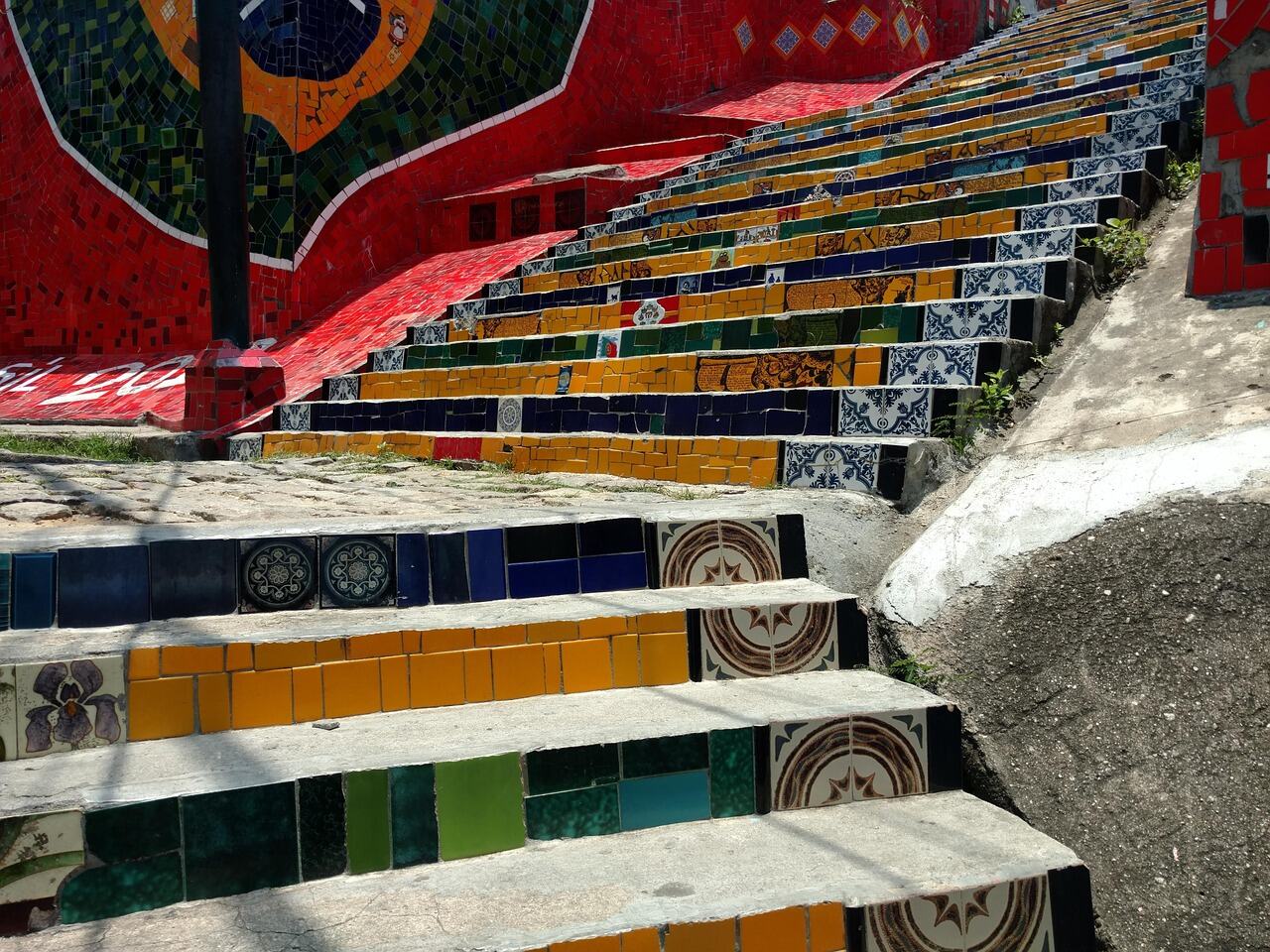
Selarón Steps
Rio de Janeiro, Brazil · Landmark
About Selarón Steps
The Selarón Steps, known locally as Escadaria Selarón, are a world-famous set of 215 outdoor steps connecting the neighborhoods of Lapa and Santa Teresa in Rio de Janeiro. Chilean-born artist Jorge Selarón spent over two decades transforming this urban stairway into a vivid mosaic masterpiece as a tribute to the Brazilian people. Today, it is recognized globally as one of Rio's most iconic cultural landmarks and a beloved photo destination.
Don't miss
- Marvel at the 215 steps decorated with over 2,000 distinct ceramic tiles sourced from around the globe.
- Spot the recurring motif of a pregnant African woman, a signature element painted by Jorge Selarón himself.
- Admire the vibrant Brazilian flag mosaic crafted entirely from yellow, green, and blue tiles near the center.
- Take in the colorful walls adorned with international tiles and street art flanking both sides of the staircase.
Plan your visit
Early morning before 9:00 AM is the best time to visit to avoid crowds and harsh midday sun. Visiting on a weekday also makes taking clear photos much easier.
The Selarón Steps are a public street and completely free to visit at any time. No tickets or advance reservations are required.
Take the Rio Metro to Cinelândia or Glória station, followed by an easy 10-minute walk towards the Arcos da Lapa. Taxis and ride-hailing apps can also drop you off right near the base of the staircase on Rua Manuel Carneiro.
Tips for visiting
- Wear comfortable walking shoes with good grip, as the tiled steps can be steep and occasionally slippery.
- Keep valuables secure and stay mindful of your surroundings, especially with cameras and smartphones in busy spots.
- Climb all the way to the top to explore the bohemian neighborhood of Santa Teresa and enjoy cooler breezes.
- Look closely at the individual tiles to find artwork, landmarks, and flags representing your home country.
- Combine your visit with nearby attractions such as the Arcos da Lapa or the Santa Teresa Tram.
Selarón Steps FAQ
Is it safe to visit the Selarón Steps?
The steps are generally safe during daylight hours when tourists and local vendors are around. However, it is wise to keep phones and jewelry out of plain sight and avoid wandering into quiet side alleys. Stick to main pathways, particularly if visiting later in the afternoon.
Can people with limited mobility access the steps?
The attraction consists entirely of steep stairs and does not have wheelchair ramps or elevators. Visitors with mobility challenges can comfortably view the bottom section from the street level. Taxis can also drop passengers off at the top in Santa Teresa for views looking down.
Why did Jorge Selarón create the staircase?
In 1990, artist Jorge Selarón began renovating the dilapidated steps outside his home as a personal artistic project. As his work gained recognition, travelers from all over the world began sending him tiles, turning it into an evolving international tribute. He continued updating the mosaic until his passing in 2013.
Can I visit the steps at night?
While the steps are publicly accessible around the clock, visiting after dark is not recommended for tourists due to safety concerns. Nearby Lapa comes alive at night with music and nightlife, but the steps themselves become poorly lit and deserted. It is best to schedule your visit during daylight hours.
More things to do in Rio de Janeiro
Christ the Redeemer Landmark
Ascend Corcovado Mountain by cogwheel train to see the iconic statue and enjoy panoramic views over the entire bay.
Sugarloaf Mountain Landmark
Ride two scenic cable cars to the summit for breathtaking vistas of Guanabara Bay and an unforgettable sunset.
Ipanema Beach Nature
Relax on golden sands framed by the Two Brothers peaks, enjoying fresh coconut water and people-watching.
Santa Teresa Neighborhood Neighborhood
Wander bohemian cobblestone streets lined with historic mansions, art studios, and quaint cafes.
Tijuca National Park Nature
Explore one of the largest urban rainforests in the world with cascading waterfalls and shaded hiking trails.
Pedra do Sal Nightlife
Experience authentic open-air samba jam sessions in the historic birthplace of carioca music.
Museum of Tomorrow Museum
Visit this striking futuristic museum on the revitalized waterfront focusing on sustainability and science.

AI-written guide, last updated 2026-10-09. Check opening times and ticket prices on the official website before you go. Photos: gettep, chienba on Pixabay.