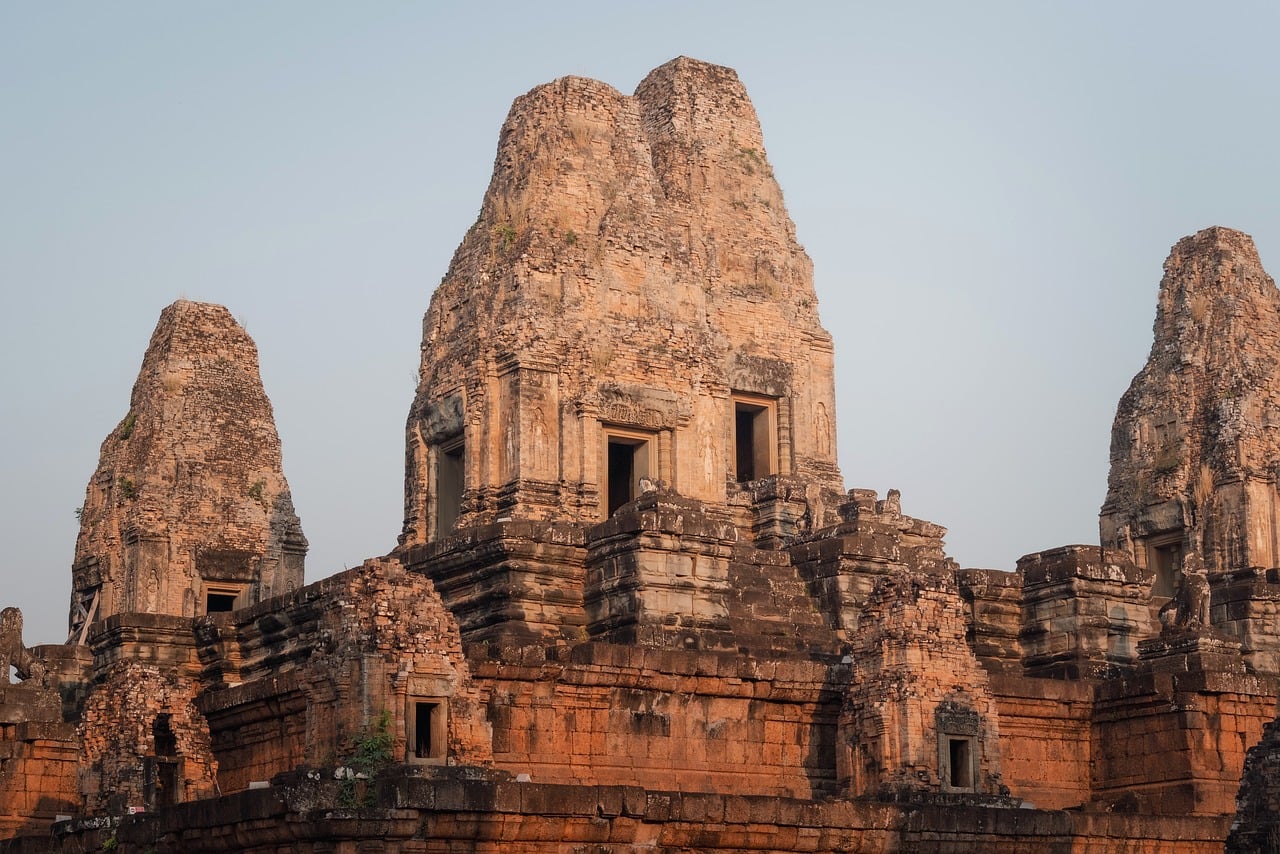
Angkor Wat
Siem Reap, Cambodia · Landmark
About Angkor Wat
Angkor Wat is a breathtaking 12th-century temple complex in northwestern Cambodia and the largest religious monument in the world. Originally constructed as a Hindu temple dedicated to Vishnu by King Suryavarman II, it gradually transformed into a revered Buddhist shrine. Today, it stands as the crowning jewel of Khmer architecture and the ultimate symbol of Cambodia's cultural heritage.
Don't miss
- Watch the dawn sky turn vivid shades of purple and orange behind the iconic lotus-bud towers across the northern reflection pond.
- Explore the legendary Gallery of Bas-Reliefs depicting epic mythological narratives like the Churning of the Ocean of Milk.
- Climb the steep stairs to the central sanctuary of the Bakan level for panoramic views over the surrounding jungle canopy.
- Admire the thousands of individually carved devatas and apsaras gracefully adorning the sandstone walls throughout the complex.
Plan your visit
The best time of day to visit is at sunrise for cooler temperatures and magnificent reflections over the ponds. The dry season from November to March offers the most comfortable weather for exploring on foot.
Visiting requires the official Angkor Pass, which can be purchased online or at the central ticket center before arrival. It is best to secure your pass ahead of time to avoid morning queues before sunrise.
Angkor Wat is located about six kilometers north of downtown Siem Reap and is easily reached via a short remork (tuk-tuk) ride. You can also hire a private car, take a guided tour, or rent a bicycle for the journey.
Tips for visiting
- Dress modestly with shoulders and knees covered, as temple dress codes are strictly enforced.
- Wear sturdy, closed-toe walking shoes to safely navigate uneven sandstone steps and ancient stone corridors.
- Bring a small flashlight or use your phone light to help navigate pathways before sunrise.
- Carry plenty of drinking water, sunscreen, and an umbrella or hat to protect against the tropical heat.
- Hire a licensed local guide at the entrance to fully appreciate the complex history and bas-relief stories.
Angkor Wat FAQ
Can I climb to the top level of Angkor Wat?
Yes, visitors can ascend to the upper terrace known as the Bakan, though access is limited to a set number of people at a time. The staircase is steep, and modest attire covering both shoulders and knees is strictly required to enter. Note that the Bakan is closed on traditional Buddhist holy days.
What is the best spot to photograph the sunrise?
The northern reflecting pond inside the main western gate offers the classic postcard view of the temple mirrored in the water. Arrive at least 45 to 60 minutes before dawn to claim a good spot along the pond's edge. Bringing a tripod and a headlamp will make setting up your shot much easier.
Are drones allowed inside Angkor Wat?
Flying drones over Angkor Wat and the surrounding archaeological park is strictly prohibited without prior written authorization from the APSARA National Authority. Unauthorized drones will be confiscated, and operators may face fines. It is safest to leave your drone at your hotel.
Is Angkor Wat wheelchair accessible?
Due to ancient stone thresholds, uneven ground, and steep staircases, interior accessibility is quite limited for wheelchair users. However, the flat outer pathways, causeway, and grounds offer decent views of the main exterior structures. Traveling with an experienced local guide can help identify the easiest routes around the site.
More things to do in Siem Reap
Bayon Temple Landmark
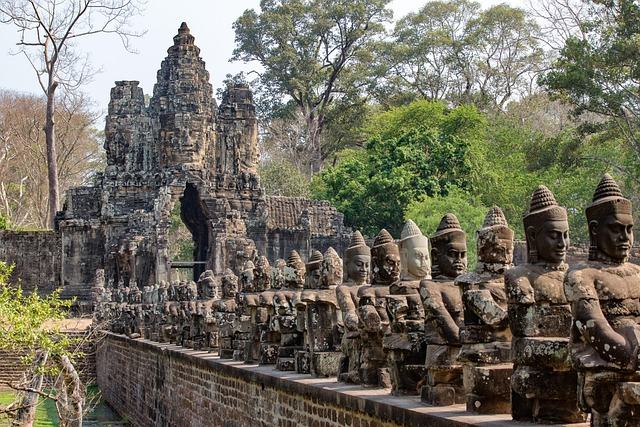
Explore the ancient royal city of Angkor Thom featuring over two hundred serenely smiling stone faces.
Ta Prohm Landmark
Walk through the atmospheric temple famously intertwined with massive silk-cotton tree roots and jungle foliage.
Banteay Srei Landmark
Marvel at a 10th-century Hindu temple celebrated for its delicate, reddish-pink sandstone carvings.
Phare, The Cambodian Circus Activity
Watch a dynamic performance combining traditional theater, modern circus arts, and social commentary by talented youth.
Angkor National Museum Museum
Learn the deep spiritual and historical context of the Khmer Empire through extensive artifact galleries.
Tonle Sap Floating Villages Nature
Take a boat excursion to stilted and floating communities like Kompong Phluk to observe daily life on Southeast Asia's largest lake.
Pub Street & Night Markets Nightlife
Soak in the buzzing evening energy with street food stalls, foot massages, and lively open-air bars.
AI-written guide, last updated 2026-10-09. Check opening times and ticket prices on the official website before you go. Photos: ahmetyuksek, dMz on Pixabay.