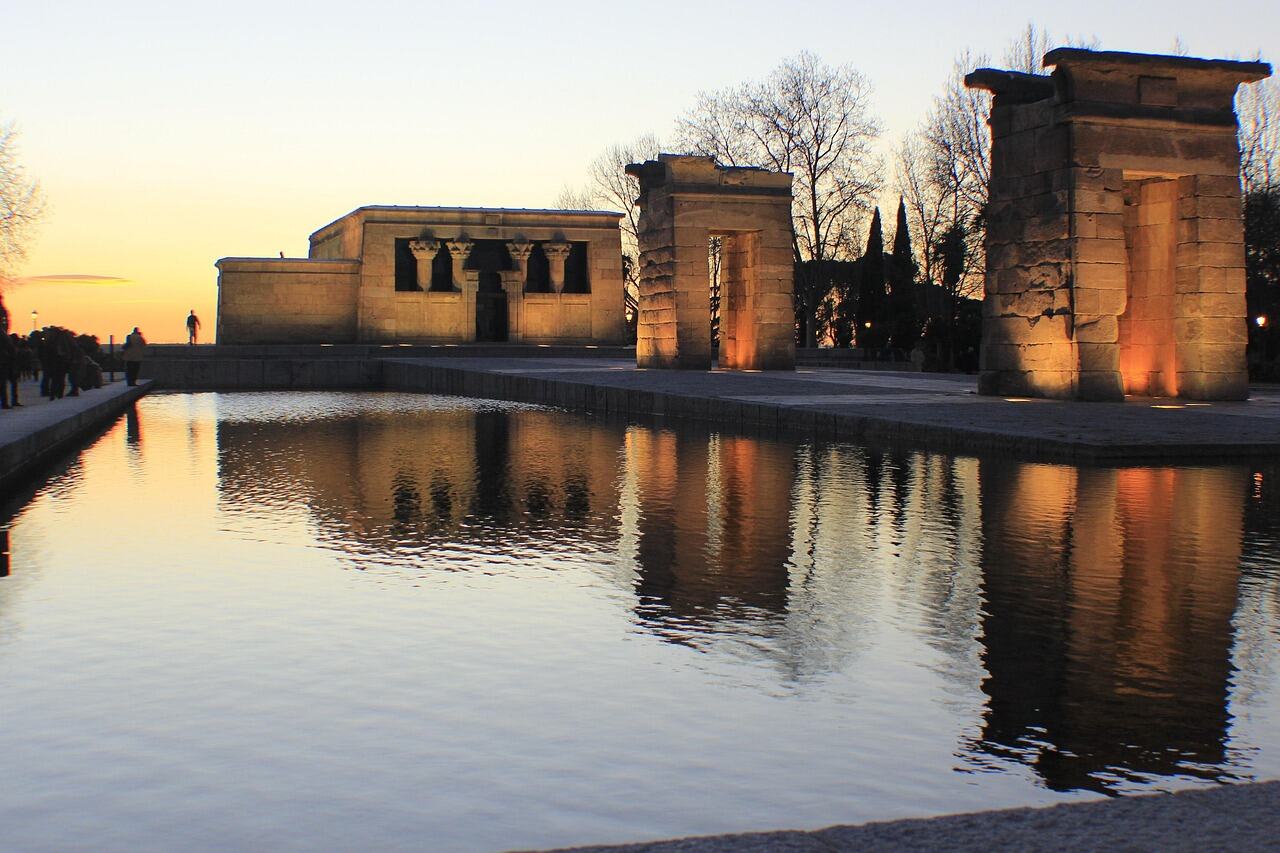
Temple of Debod
Madrid, Spain · Landmark
About Temple of Debod
The Temple of Debod is an authentic ancient Egyptian temple originally constructed during the second century BC in the Nile Valley. It was dismantled and gifted to Spain in 1968 as gratitude for Spanish aid in saving the Abu Simbel monuments from flooding. Today, it stands proudly in Madrid's Parque del Oeste and is world-famous for its dramatic sunset panoramas.
Don't miss
- Marvel at the ancient hieroglyphs and original stone reliefs carved into the walls of the inner chapel.
- Take in panoramic vistas over Madrid's Royal Palace and Casa de Campo from the viewpoint behind the monument.
- Walk between the two monumental stone portals that form the historic entryway to the sacred complex.
- Watch the stone facade glow against the evening sky as the site lights up after dark.
Plan your visit
The best time to visit is late afternoon just before sunset, when golden light illuminates the ancient stone and offers a stunning evening spectacle. Spring and autumn offer the most pleasant temperatures for relaxing in the park.
Admission inside the temple is free, though capacity is strictly limited and entry is managed on a first-come, first-served basis. You cannot book tickets in advance, so prepare for potential queues during busy hours.
Take Metro lines 3 or 10 to Plaza de España station, followed by an easy ten-minute stroll through the park. Several city bus routes also stop along Calle de Ferraz adjacent to the monument grounds.
Tips for visiting
- Arrive well before dusk if you want to claim a prime spot on the grass for watching the sunset.
- Be prepared to wait in line outside if you plan to visit the interior chambers, as visitor numbers inside are capped.
- Note that the surrounding shallow pool may occasionally be drained for ongoing conservation and maintenance work.
- Bring a blanket or snack to enjoy the pleasant park setting while waiting for twilight.
- Combine your trip with an easy walk to the nearby Royal Palace and Sabatini Gardens.
Temple of Debod FAQ
Why is an ancient Egyptian temple located in Madrid?
The temple was donated to Spain in 1968 by the Egyptian government to show appreciation for archaeological assistance. Spanish engineers helped rescue the temples of Abu Simbel and other historic sites threatened by the rising waters of the Aswan High Dam. It was painstakingly transported stone by stone and reconstructed in its current spot.
Can visitors go inside the Temple of Debod?
Yes, the interior of the temple is open to the public during scheduled hours. Entry is monitored in small groups to regulate humidity and safeguard the ancient stone surfaces. Lines can move slowly during peak afternoons, so plan extra time for your visit.
Is photography permitted at the site?
Casual photography without flash is permitted both outside in the park and inside the historic chambers. Tripods and commercial camera setups are typically restricted inside to protect the delicate carvings and keep visitor flow moving. The exterior grounds offer incredible photo opportunities with no restrictions.
Are there public restrooms or cafes on site?
There are no restrooms or dining services inside the ancient temple structure itself. You can find public facilities and small seasonal snack kiosks in the surrounding Parque del Oeste. Many cafes and restaurants are also located just a short walk away near Plaza de España.
More things to do in Madrid
Prado Museum Museum
Admire masterpieces by Goya, Velázquez, and El Greco in one of the finest art galleries on earth.
El Retiro Park Nature
Stroll lush shaded paths, rent a wooden rowboat on the lake, and visit the stunning glass-and-iron Palacio de Cristal.
Royal Palace of Madrid Landmark
Explore the lavishly decorated banquet halls and private rooms of Europe's largest functioning royal residence.
Plaza Mayor Landmark
Soak in the grand 17th-century arcaded square surrounded by traditional red-brick facades and brass street lamps.
Reina Sofía Museum Museum
View Spain's groundbreaking 20th-century modern art collection, crowned by Picasso's famous Guernica.
Mercado de San Miguel Food
Sample fresh oysters, Iberian ham, and artisan cheeses inside a gorgeous restored iron-frame food market.
Barrio de las Letras Neighborhood
Wander pedestrian lanes once home to Cervantes, now filled with lively bookshops, cafes, and tapas bars.
AI-written guide, last updated 2026-10-09. Check opening times and ticket prices on the official website before you go. Photos: mivservices, Lopez_Grande on Pixabay.